This guide walks through the three numbers that decide pump size: pond volume, turnover rate and head height. It includes worked examples you can copy for your own pond.
Quick answer: pond pump size by pond volume
| Pond volume | Garden pond (turnover every 2 hours) | Koi or fish-heavy pond (turnover every hour) |
|---|---|---|
| 250 gallons | about 125 GPH | about 250 GPH |
| 500 gallons | about 250 GPH | about 500 GPH |
| 1,000 gallons | about 500 GPH | about 1,000 GPH |
| 2,000 gallons | about 1,000 GPH | about 2,000 GPH |
| 4,000 gallons | about 2,000 GPH | about 4,000 GPH |
These are flow rates you need at your working head height. Because a pump’s rated GPH is measured at zero head, choose a pump rated higher than the number in the table once you add a waterfall, filter or long pipe run.
Step 1: Work out your pond volume in gallons
Measure in feet, then use the formula that matches your pond’s shape:
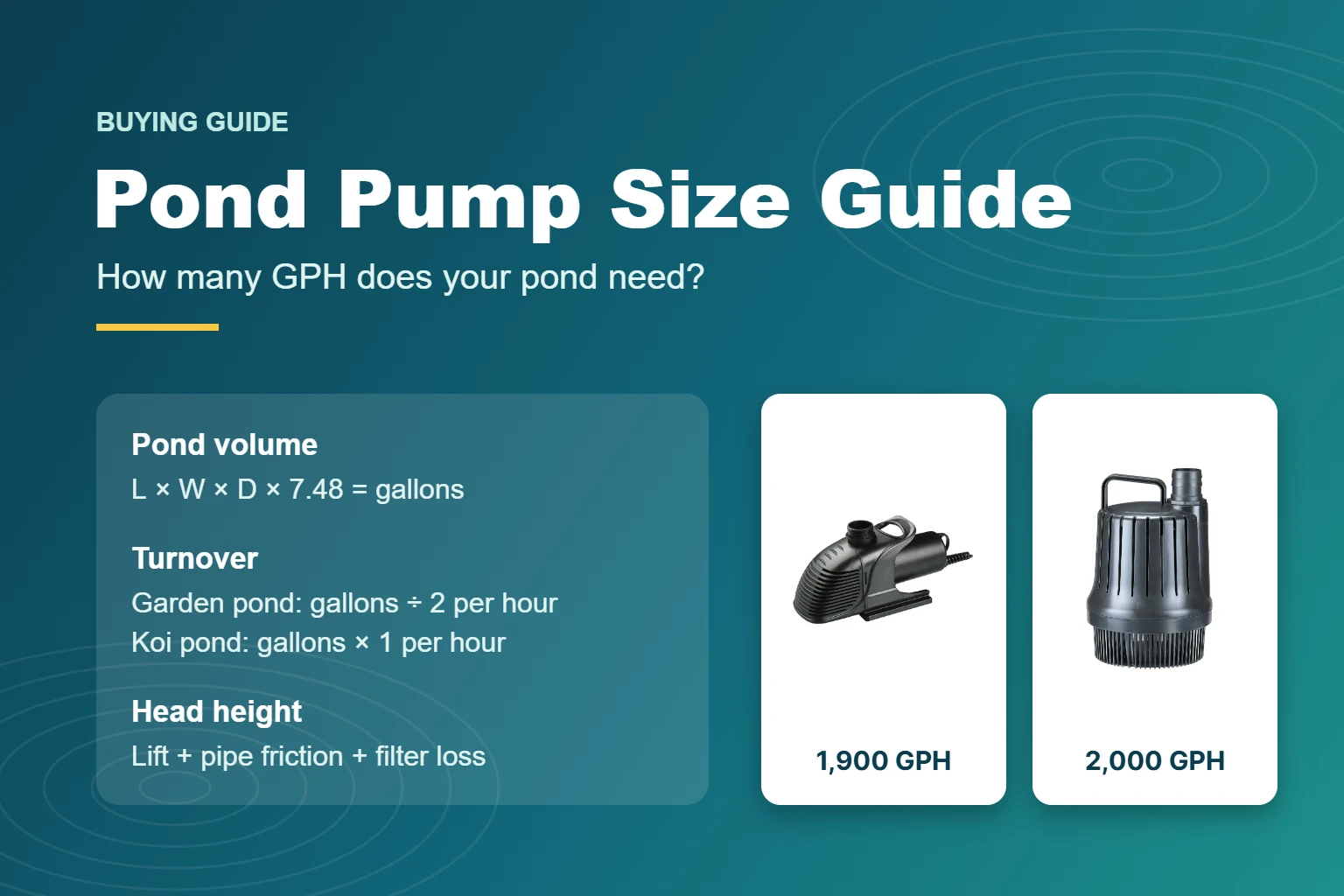
- Rectangle or square: length × width × average depth × 7.48
- Circle: diameter × diameter × average depth × 5.87
- Oval: length × width × average depth × 5.87
- Irregular shape: split the pond into rough rectangles and circles, work out each one, then add them together
Example: a 10 ft × 6 ft pond with an average depth of 2 ft holds 10 × 6 × 2 × 7.48 = about 900 gallons.
Step 2: Choose your turnover rate
Turnover rate is how often the full pond volume passes through the pump and filter. A widely used guideline is once every two hours for a garden pond and at least once an hour for a koi pond, because koi produce much more waste (Champion Koi).
- Garden pond, few fish: GPH = pond gallons ÷ 2
- Koi or heavily stocked pond: GPH = pond gallons × 1
- Fountain only, no fish: size for the fountain head or spray height you want
So the 900-gallon pond above needs about 450 GPH as a garden pond, or about 900 GPH with koi.
Step 3: Add up your head height
Head height is the resistance the pump works against. Every pump has a flow curve, and its real output falls as head rises. Total head is made up of:
- Vertical lift: the height from the pond’s water surface to where the water comes out (top of a waterfall, filter inlet or fountain)
- Pipe friction: longer runs, narrower pipe and extra elbows all add resistance
- Filter and UV loss: pressurized filters and UV clarifiers add resistance too
Pipe size makes a big difference. At 3,600 GPH, friction loss is about 20 ft per 100 ft of 1½-inch pipe but only about 5.8 ft per 100 ft of 2-inch pipe (Champion Koi). If your run is long, wider pipe can save you from buying a bigger pump.
Step 4: Match the pump to your flow at your head
Now look at the manufacturer’s flow chart for each pump you are considering. Find your total head on the chart and read the GPH at that point. Pick a pump that delivers at least your target GPH there.
Example: a koi pond needs 900 GPH and has a waterfall that adds about 4 ft of lift plus some filter and pipe loss. A pump rated at 950 GPH at zero head will deliver noticeably less at that head, so a higher-rated pump, such as a 1,900 or 2,000 GPH model, is the safer choice.
How to size a pump for a pond waterfall
Waterfalls need enough flow to make a sheet of water across the spillway. A common rule of thumb used by pond builders is about 100–150 GPH per inch of waterfall width for a gentle flow, and more for a heavier curtain of water. Treat this as a starting point and check it against your turnover rate; use whichever number is higher.
Example: a 12-inch spillway at 150 GPH per inch needs about 1,800 GPH at the waterfall’s head height. A dedicated waterfall pump like the Pondmaster Waterfall/Skimmer Pump 2000 is built for this kind of setup.
Pondmaster pumps by size
| Pump | Rated flow | Typical use |
|---|---|---|
| Fountain-Mag Mini 35 | 35 GPH | Tabletop fountains |
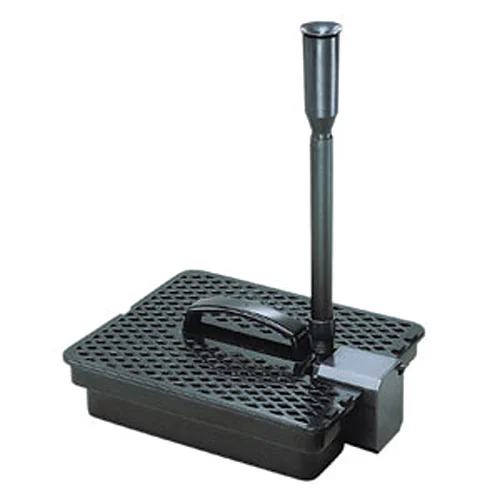
| PMK 190 Filter & Pump Kit | 190 GPH | Small patio and garden ponds |
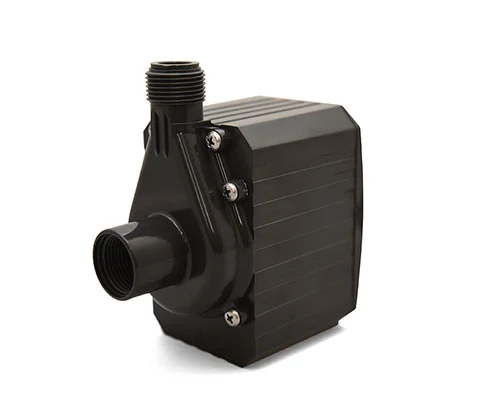
| Pond-Mag PM 950 | 950 GPH | Small to mid garden ponds, low head |
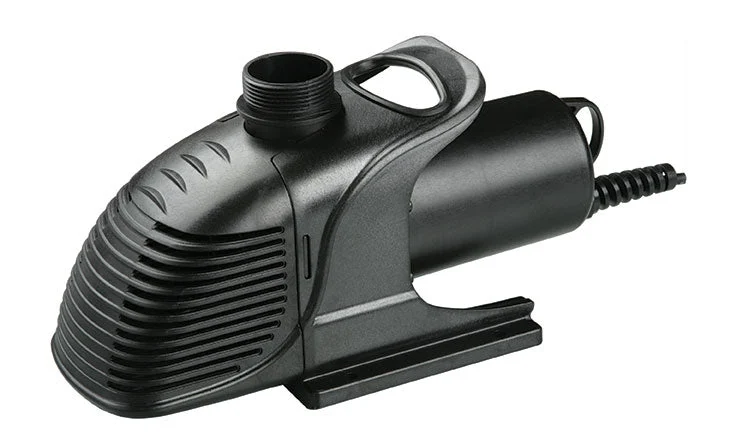
| Hy-Drive 1900 | 1,900 GPH | Mid-size ponds, skimmers, waterfalls |
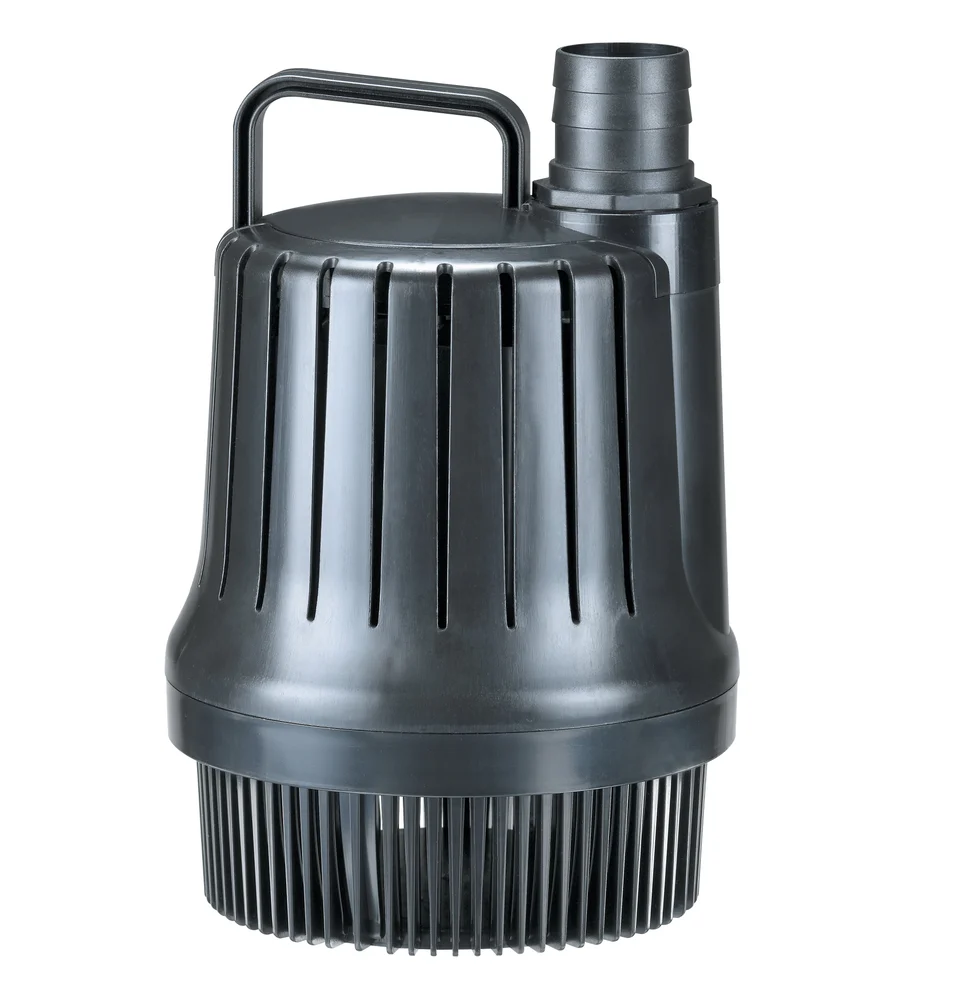
| Waterfall/Skimmer Pump 2000 | 2,000 GPH | Waterfall and skimmer builds |
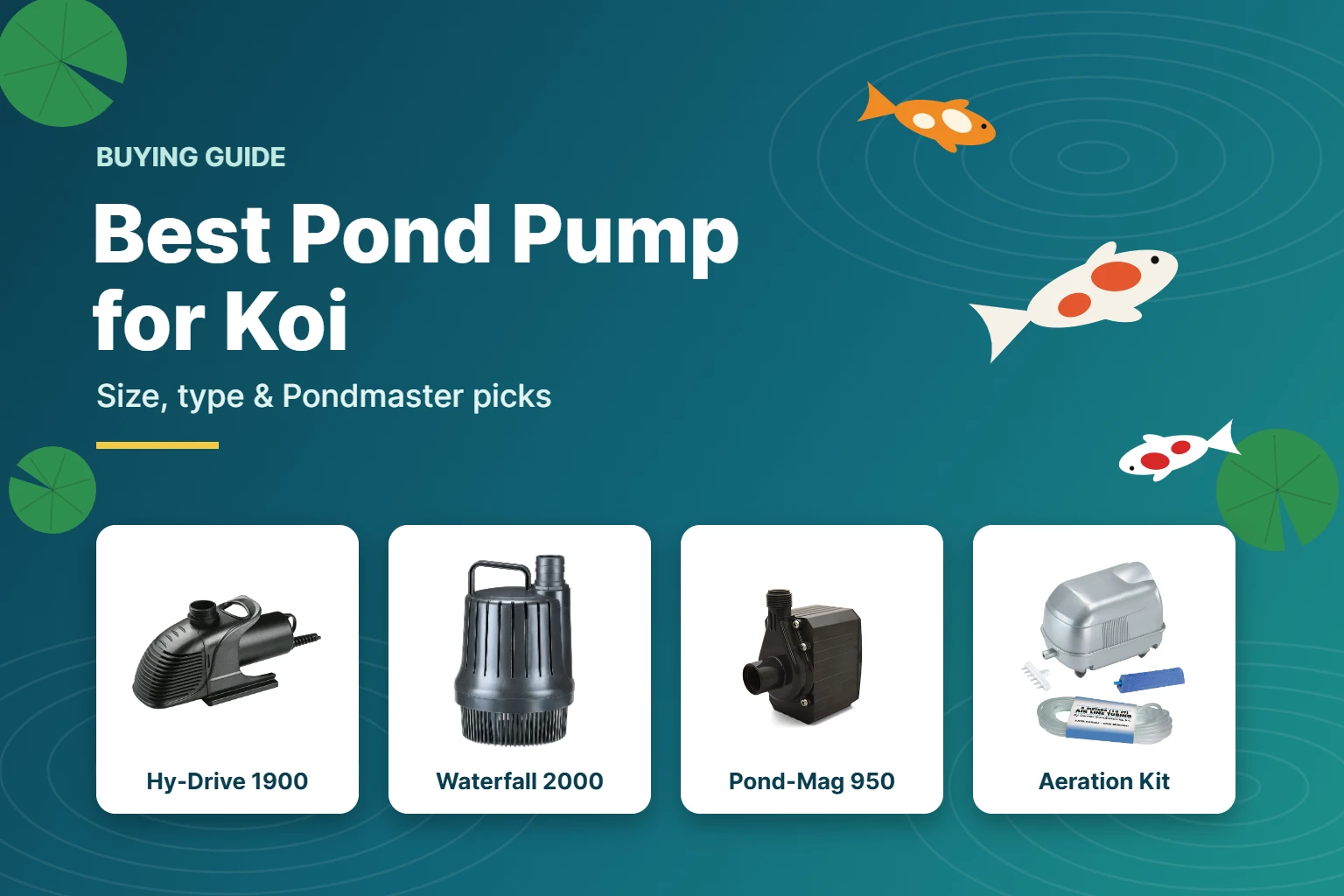
Rated flow is the maximum at zero head. For koi ponds, read our Best Pond Pump for Koi guide. Retailers and installers can buy these as wholesale pond pumps.
Common pond pump sizing mistakes
- Using the box number: rated GPH is a zero-head figure; real flow is always lower
- Forgetting the filter: a pump stronger than the filter’s maximum flow pushes water through too fast to clean it
- Narrow pipe on long runs: friction can eat a large share of the pump’s output
- Ignoring the fish: koi ponds need roughly double the turnover of a lightly stocked garden pond
Pond pump size FAQ
What size pond pump do I need?
For a garden pond, choose a pump that moves half your pond volume per hour; for a koi pond, at least your full volume per hour. Measure this at your real head height, not the zero-head number on the box.
What does GPH mean on a pond pump?
GPH means gallons per hour, the volume of water the pump moves in one hour. The advertised GPH is usually measured at zero head, so real flow is lower once water is lifted or pushed through a filter.
How many GPH do I need for a 1,000-gallon pond?
About 500 GPH for a lightly stocked garden pond, or about 1,000 GPH for a koi pond, delivered at your working head height.
Can a pond pump be too big?
Yes. A pump that exceeds your filter’s maximum flow rate can push water through too fast for proper filtration, and very strong flow can stress fish in a small pond.
How do I calculate head height for a pond pump?
Add the vertical lift from the water surface to the outlet, plus resistance from pipe length, fittings and any pressurized filter or UV unit. Then read the pump’s flow chart at that total head.
How much flow does a pond waterfall need?
A common starting point is about 100–150 GPH per inch of spillway width for a gentle flow, with more for a heavier sheet of water. Use this or your turnover rate, whichever is higher.
Key takeaways
- Pond volume (gallons) = L × W × D × 7.48 for rectangular ponds
- Garden ponds: turnover every 2 hours; koi ponds: at least every hour
- Always size at your real head height, using the manufacturer’s flow chart
- Waterfalls: start at about 100–150 GPH per inch of spillway width
- Keep pump flow within your filter’s rating