This guide shows you how to size a koi pond pump, why head height matters, and which Pondmaster pumps fit which pond.
Quick Answer: Which Pondmaster Pump Fits Your Koi Pond?
| Pondmaster model | Rated flow | Best fit | Koi-ready? |
|---|---|---|---|
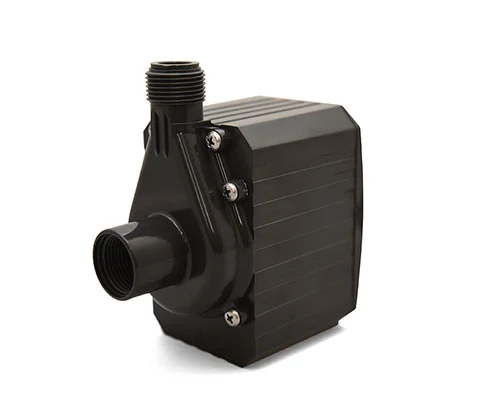
| Pond-Mag PM 950 (02720) | 950 GPH | Small koi ponds with low head and simple filter runs | Yes, for small ponds |
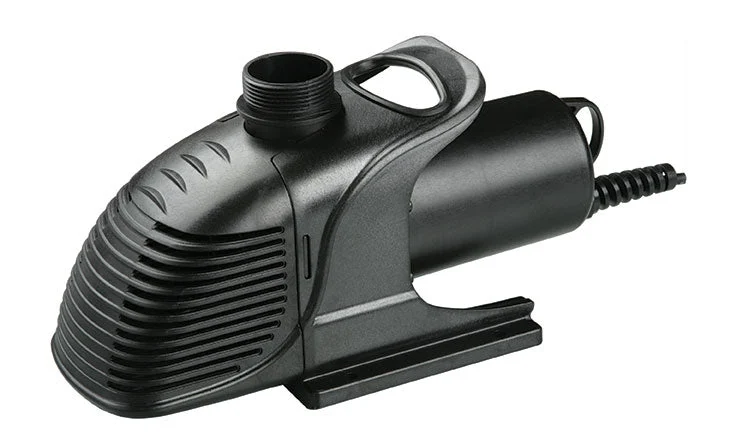
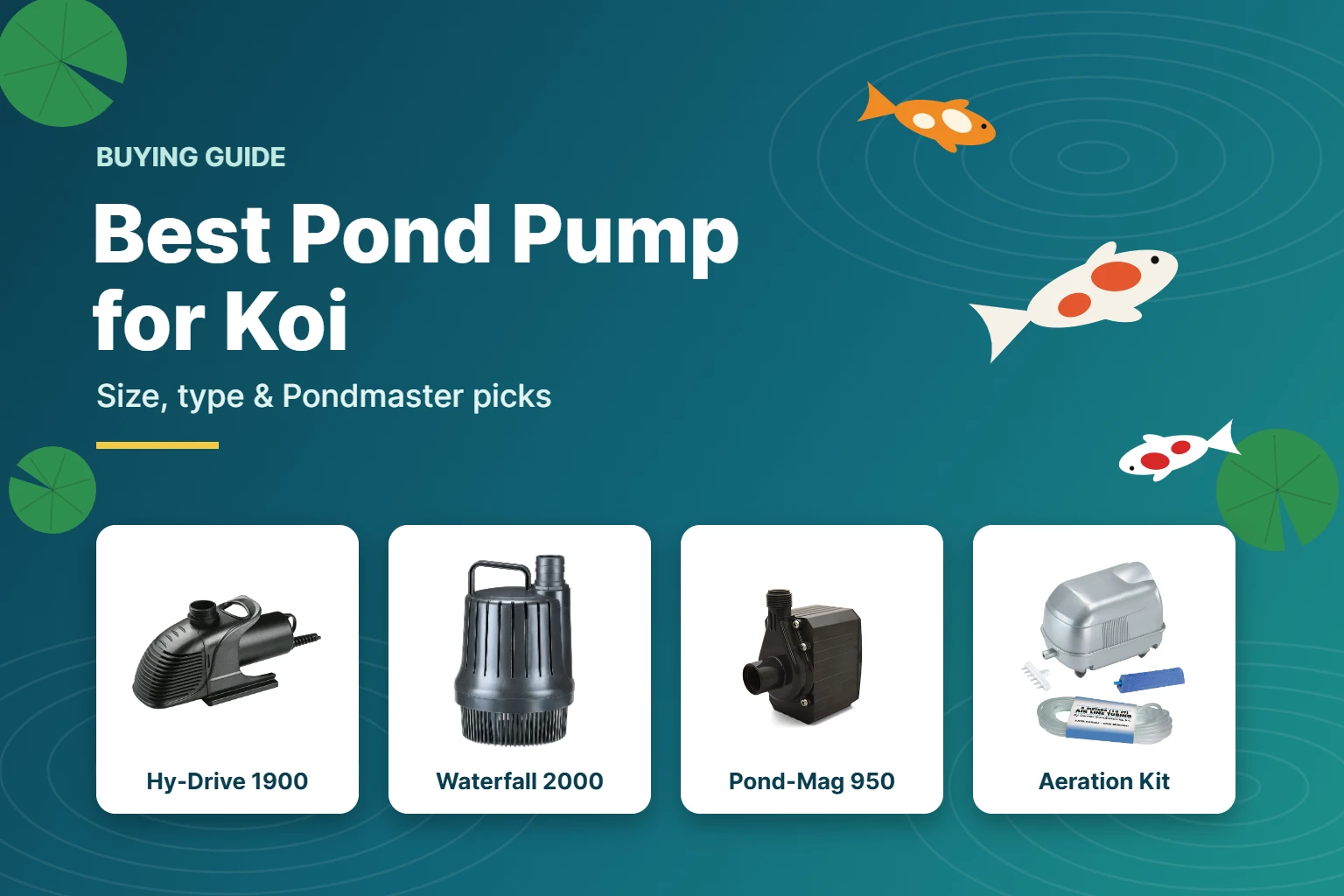
| Hy-Drive 1900 (20210) | 1,900 GPH | Mid-size koi ponds, skimmers and waterfalls | Yes |
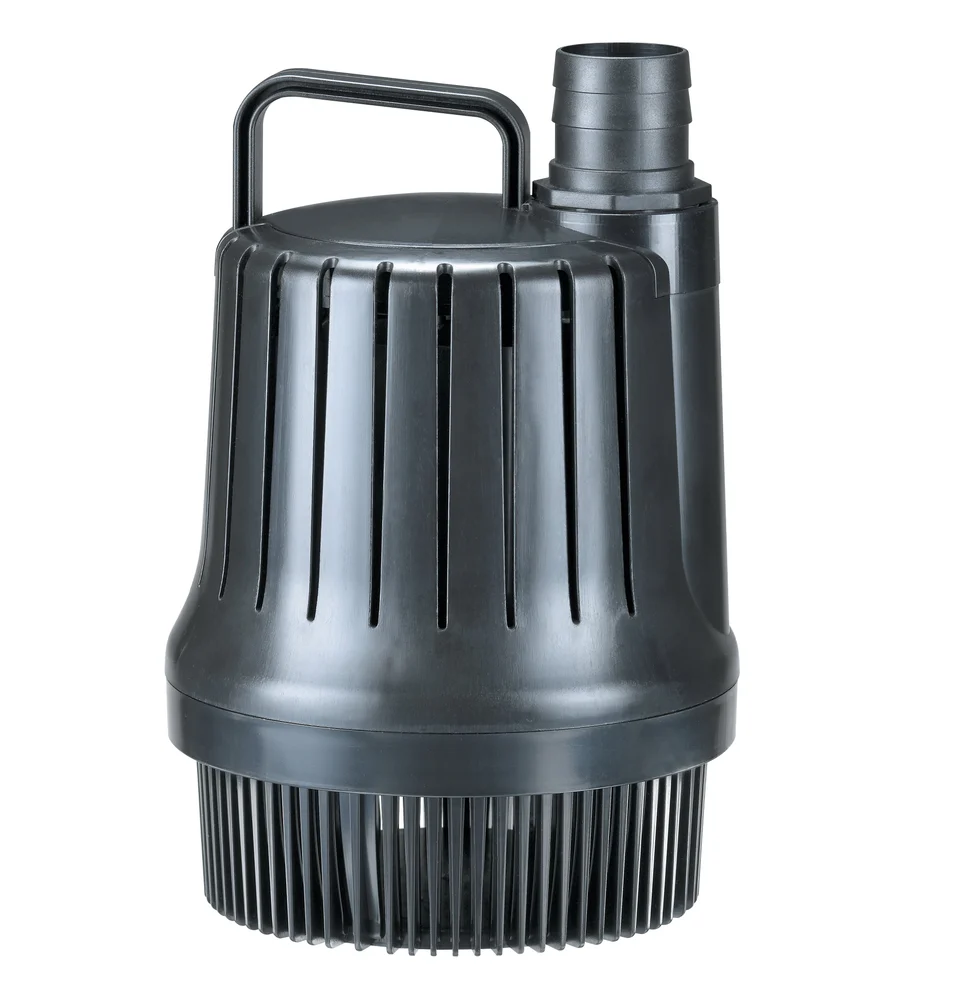
| Waterfall/Skimmer Pump 2000 (02650) | 2,000 GPH | Koi ponds with a waterfall or skimmer box | Yes |
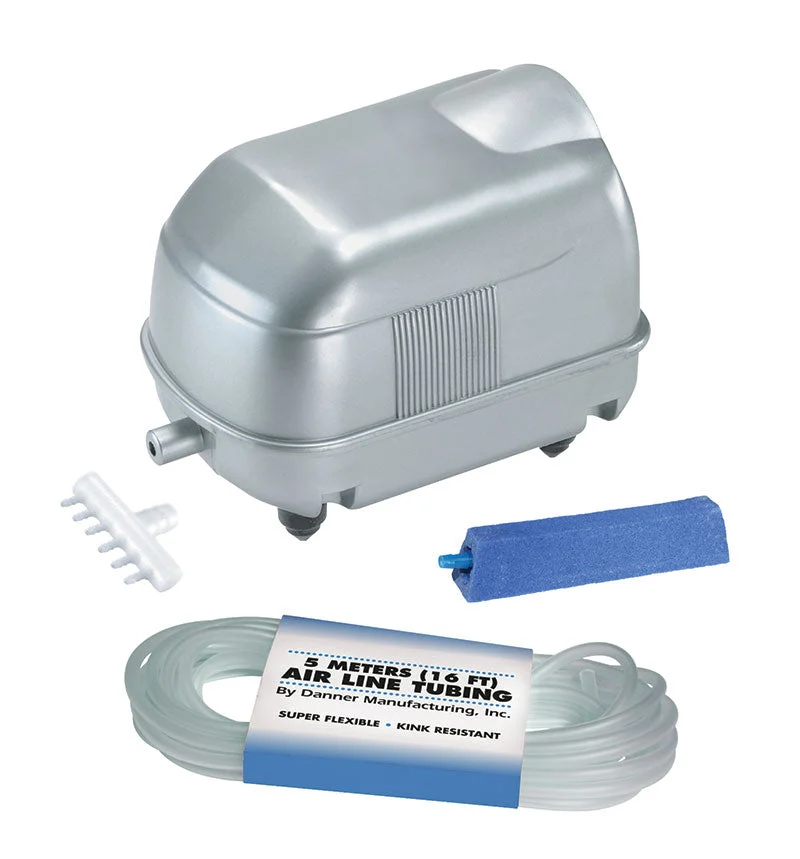
| Pond Aeration Kit (04511) | AP-20 air pump, 6 air stones | Extra oxygen alongside your water pump | Yes, as an add-on |
| Garden Pond Filter & Pump Kit PMK 190 (02019) | 190 GPH | Small patio and garden ponds | No, too small for koi |
| Fountain-Mag Mini 35 (02501) | 35 GPH | Tabletop water features | No |
Rated flow is the maximum at zero head. Your real flow will be lower once you add lift, filters and pipe, so size up. The next sections explain how.
What Size Pond Pump Do I Need for a Koi Pond?
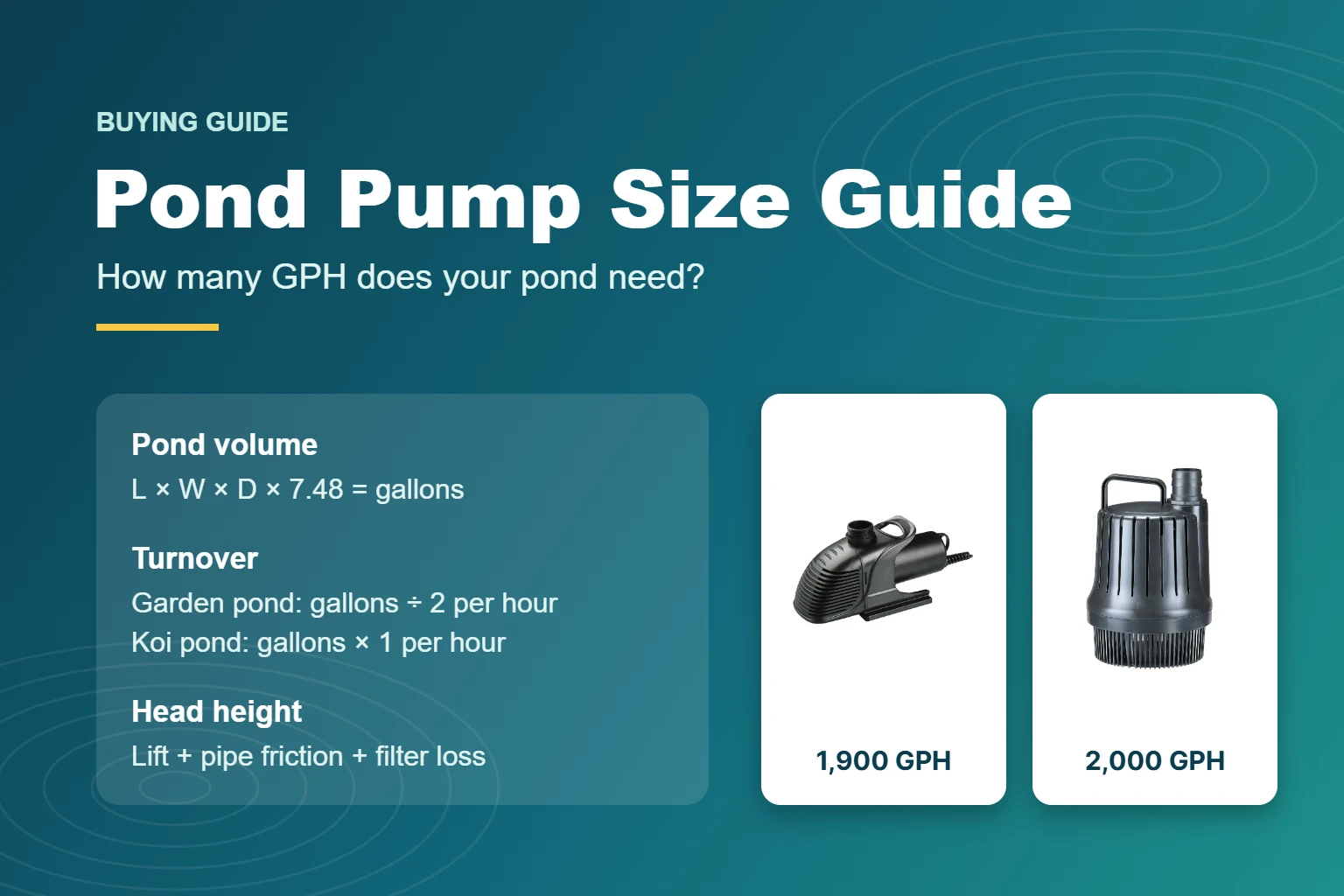
For koi, plan on one full turnover per hour. Garden ponds with a few goldfish can get by on a turnover every two hours, but koi produce much more waste and need faster filtration (Champion Koi).
The basic formula is simple:
Required flow (GPH) = pond volume (gallons) × 1
So a 1,500-gallon koi pond needs a pump that delivers about 1,500 GPH at your working head height.
How to work out your pond volume
- Measure length, width and average depth in feet.
- Multiply: L × W × D = cubic feet.
- Multiply cubic feet by 7.48 to get gallons.
Example: a 12 ft × 8 ft pond with an average depth of 2.5 ft holds 240 cubic feet, or about 1,795 gallons. That pond needs roughly 1,800 GPH of real flow.
For circular and irregular ponds, waterfalls and more worked examples, see our full pond pump size guide.
Why Head Height Changes Your Pump's Real Flow
Head height is the total resistance your pump pushes against. It includes:
- Vertical lift: the height from the pond surface to the top of your waterfall or filter outlet
- Filter resistance: pressurized filters and UV units add loss
- Pipe friction: long runs, narrow pipe and elbows all reduce flow
Every pump has a flow curve. Advertised GPH is measured at zero head, so the number you actually get is always lower. One koi guide works through a typical setup and arrives at about 11 ft of total head (5 ft of waterfall lift, 2 ft of filter loss, 4 ft of pipe friction), and advises checking the pump curve "at your head, not at zero" (Champion Koi).
Pipe size matters more than most people expect. At 3,600 GPH, friction loss is about 20 ft per 100 ft of 1½-inch pipe, but only about 5.8 ft in 2-inch pipe (same source). Wider pipe lets a smaller pump do more.
Rule of thumb: if your setup has a waterfall or pressurized filter, choose a pump rated noticeably higher than your pond volume, then confirm with the manufacturer's flow curve for that model.
Example: Pond-Mag 950 head height
The Pondmaster Pond-Mag 950 is rated at 950 GPH, with a listed maximum head of about 12 ft 10 in, an 18 ft cord and ¾-inch fittings (That Pet Place). At max head the flow drops to zero, so in practice it suits smaller koi ponds with short pipe runs and modest lift.
Magnetic Drive vs Hybrid Drive Pond Pumps for Koi
Pondmaster offers two main motor styles, and both are common in koi ponds:
- Magnetic drive (Pond-Mag, Waterfall/Skimmer 2000): a magnet spins the impeller with no direct shaft seal. These pumps are known for quiet, continuous running, which matters because a koi pond pump runs 24/7. The Pond-Mag uses an epoxy-encased power unit, and the Waterfall/Skimmer 2000 ships with a check valve and 1½-inch fittings.
- Hybrid magnetic/direct drive (Hy-Drive 1900): combines both designs to push higher volume for skimmer and waterfall setups. It comes with a pump protection bag that helps keep debris away from the intake.
For most koi keepers, the choice comes down to flow and head. Pick the motor style that delivers your target GPH at your real head height.
Do Koi Ponds Need an Air Pump as Well as a Water Pump?
Yes. A water pump moves and filters water, but koi also need strong dissolved oxygen, especially in summer heat and in heavily stocked ponds.
A common sizing guide is about 1 CFM of air per 1,000 gallons, rising to 1.5–2 CFM for deep or heavily stocked ponds (Champion Koi). Air pumps should run year-round, and a battery backup is worth considering, because a power cut can leave fish without oxygen overnight.
The Pondmaster Pond Aeration Kit is built around the AP-20 air pump and includes a six-port manifold, six 4-inch air stones and three 16-foot sections of air-line tubing. Browse the full Aeration range.
Pump and Filter: Why They Have to Match
Your pump and filter work as one system. A pump that is too strong for the filter pushes water through before the media can clean it, and a pump that is too weak lets waste build up.
When choosing a koi pond pump:
- Check the maximum flow rating of your filter and keep the pump within it
- Account for filter resistance in your head calculation, especially with pressurized filters
- Plan mechanical plus biological filtration for koi, since ammonia from fish waste is the main water-quality risk
See Pondmaster filters in the Pond Filtration category.
Submersible Koi Pond Pumps: Placement Tips
Submersible pumps are the easiest option for most backyard koi ponds. For best results:
- Raise the pump slightly off the pond floor so it doesn't pull in sludge
- Place it away from the filter return so clean water circulates through the whole pond
- Use a skimmer box or pre-filter to protect the intake from leaves and debris
- Follow the manufacturer's model-specific winterizing guidance
Buying Pond Pumps Wholesale
If you are a pond retailer, garden center, landscaper or pond installer, Pump the Fuel Distribution supplies wholesale pond pumps, filters and aeration kits from Danner Pondmaster for resale and installation work. Stock ships from U.S. warehouses in New York, Florida and Texas.
Pricing, case quantities and minimums are confirmed in your quote. Request wholesale pricing or browse all Water Pumps.
New to wholesale buying? Read our guides on MOQ and case packs and how to compare wholesale quotes.
FAQ: Pond Pumps for Koi
What is the best pond pump for koi?
The best pond pump for koi is one that turns over your full pond volume at least once per hour at your actual head height. For mid-size koi ponds, a 1,900–2,000 GPH pump such as the Pondmaster Hy-Drive 1900 or Waterfall/Skimmer 2000 is a common choice.
How many GPH do I need for a 1,000-gallon koi pond?
You need about 1,000 GPH of real flow after head loss. Because rated GPH is measured at zero head, choose a pump rated well above 1,000 GPH if you have a waterfall or pressurized filter.
Should a koi pond pump run 24/7?
Yes. Koi ponds rely on constant circulation and filtration to keep ammonia down and oxygen up, so the pump should run continuously.
Do I need an air pump if I have a water pump?
Yes, an air pump is strongly recommended for koi. A common guide is about 1 CFM of air per 1,000 gallons, more for deep or heavily stocked ponds.
Is a bigger pond pump always better for koi?
No. A pump that exceeds your filter's maximum flow will push water through too fast for proper cleaning. Match the pump to both your pond volume and your filter rating.
Can I use a small fountain pump in a koi pond?
No. Small fountain pumps like 35–190 GPH units are designed for tabletop features and small garden ponds. They cannot move enough water to filter a koi pond.
Key Takeaways
- Size your koi pond pump for one full turnover per hour: GPH = pond gallons
- Measure flow at your real head height; advertised GPH is a zero-head number
- Wider pipe and fewer elbows mean more real flow from the same pump
- Add an air pump sized at about 1 CFM per 1,000 gallons
- Keep pump flow within your filter's rating
- Retailers and installers can request wholesale pricing on Pondmaster pumps, filters and aeration kits