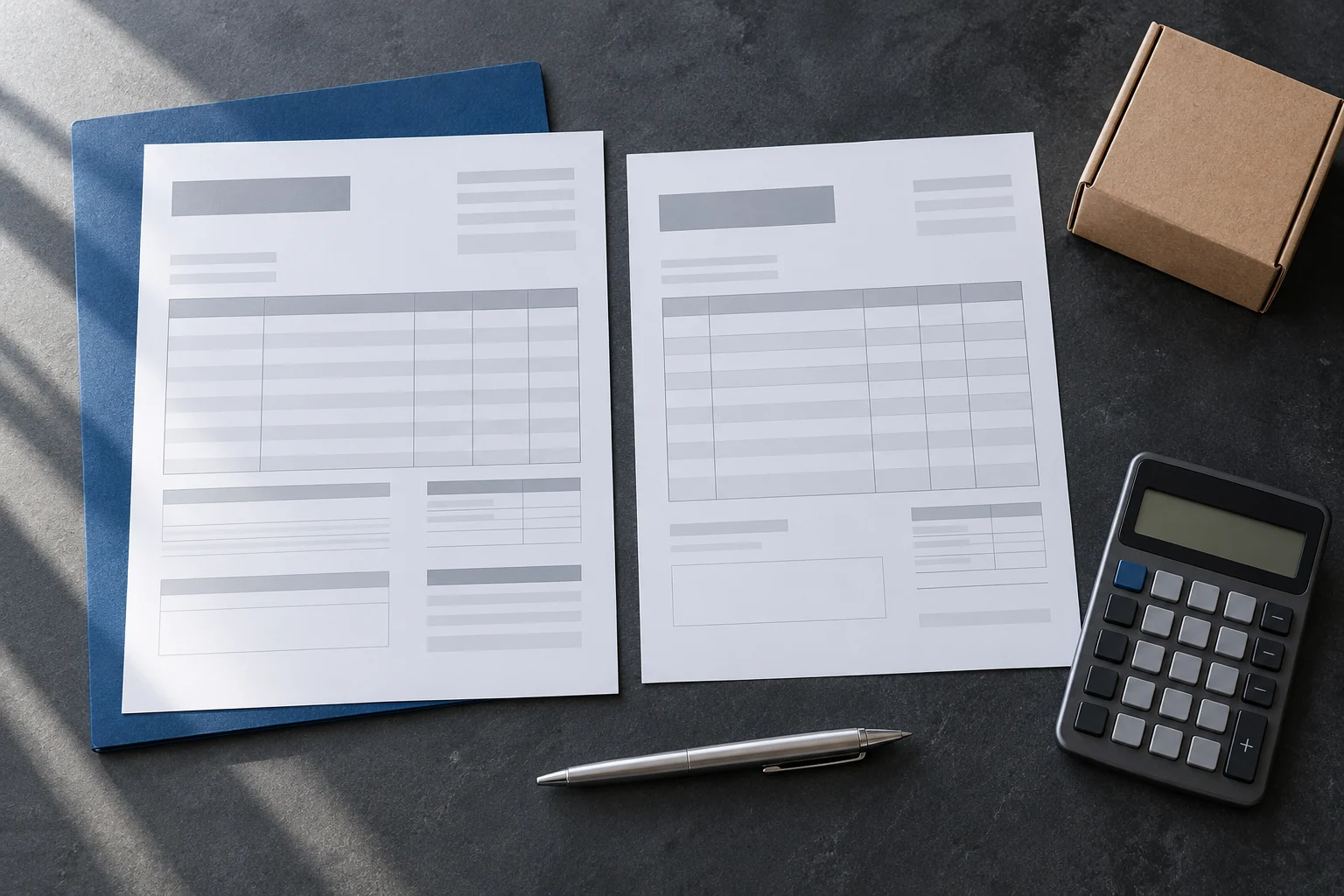
When two suppliers send quotes, it is tempting to pick the lower unit price. But a quote is more than a price: it includes pack size, freight, timing and terms. Learning how to compare wholesale quotes properly helps you avoid surprises and choose the offer that actually costs less and fits your business. This guide shows you how, with a simple worksheet method.
Step 1: Compare the same item and format
Start with an exact match: brand, variant, size, packaging and total quantity. Two quotes cannot be compared if one covers single units and the other covers a multipack or a different case pack. Keep each original quote alongside your comparison sheet.
Note whether substitutions are allowed and who approves them. A similar product may not meet your customer's needs, even if it is cheaper. If you are unsure how case packs affect a quote, read our guide on MOQ meaning and case packs.
Step 2: List every charge separately
Create separate rows for the product cost, freight, handling, preparation and any other charges. Mark missing amounts as "awaiting confirmation" rather than counting them as zero.
Step 3: Calculate landed cost per unit
Landed cost is the total cost to get products to your door, divided by the number of units:
Landed cost per unit = (product cost + freight + other charges) ÷ total units
| Line | Quote A | Quote B |
|---|---|---|
| Units | 100 | 100 |
| Unit price | $5.00 | $4.70 |
| Product total | $500 | $470 |
| Freight | $50 | $110 |
| Landed total | $550 | $580 |
| Landed cost per unit | $5.50 | $5.80 |
In this example, Quote B has the lower unit price but the higher landed cost. These figures are illustrations, not Pump the Fuel pricing.
Step 4: Keep delivery timing visible
Record the proposed dispatch window and delivery arrangement next to the cost comparison. Ask which dates are estimates and which can be confirmed. A cheaper quote that arrives after your selling season may cost you more in lost sales. Make sure the quote matches your actual destination, and do not assume delivery to a fulfillment facility includes preparation or labeling.
Step 5: Read payment and issue-resolution terms
Note when payment is due, the verified recipient and the reference needed to match payment to the order. Check what happens if an item is unavailable, damaged or different from the agreed specification, and how to report an issue. Keep your quote, order confirmation and delivery records together.
Step 6: Score the whole offer
A comparison sheet should make trade-offs visible, not just rank by price. Consider:
- Quantity fit: does the minimum match what you can sell?
- Storage: do you have space for the full order?
- Product relevance: is it exactly what your customers want?
- Reliability: clear communication and confirmed delivery.
- Total landed cost per unit.
Our small business inventory management guide helps you decide how much stock you can realistically hold.
Step 7: Resolve open questions before you commit
If the scope changes, ask for an updated quote. Do not proceed with unconfirmed charges or vague terms. Our wholesale supplier checklist lists the key questions, and the wholesale product planning guide covers margin and marketplace considerations.
Comparing quotes FAQ
What is landed cost?
Landed cost is the total cost of getting products to your location, including product price, freight and other charges, usually expressed per unit.
Is the cheapest wholesale quote always the best?
No. Freight, minimums, delivery timing and terms can make a lower unit price more expensive overall.
How do I compare quotes with different case packs?
Convert both quotes to cost per individual unit using the confirmed units per case, then compare landed cost per unit.
How do I request a quote from Pump the Fuel?
Open any product in the wholesale catalog, select Request wholesale pricing and share your quantities and destination.
Ready to prepare your inquiry?
Explore product formats, then share the quantities and destination your business has in mind.
Browse wholesale products ↗